Difference between Level 2 Gym Instructor and Level 3 Personal Trainer
Thinking about a career in fitness but not sure which qualification to go for? Here's a clear breakdown of what Level 2 and Level 3 actually mean and what you can do with each, how they differ, and which one is right for where you want to go.
If you’re exploring a career in fitness, you’ve probably come across a lot of job titles – Gym Instructor, Fitness Instructor, Personal Trainer, Fitness Coach. They can all sound like the same thing from the outside.But the difference between them comes down to one thing: qualification level.
In the UK fitness industry, there are two core entry points – a Level 2 Gym Instructor qualification and a Level 3 Personal Trainer qualification. Understanding what each one covers, and what each one allows you to do professionally, is the starting point for choosing the right path.
A gym instructor (or fitness instructor) is someone whose job it is to help other people improve their fitness. They are usually employed to work within a specific gym, providing support to gym members, often acting as the first person to show them around during their induction.
Instructors will spend time ‘walking the floor’, talking to members and offering advice and assistance. If qualified, they may also cover certain group fitness classes. They may then contact members every few weeks and offer to update their program and do a fitness assessment.
NOTE: Gym members normally get the services of a Gym Instructor included as part of their monthly gym fee.
A personal trainer is someone who is qualified and employed by someone else to give advice and guidance on exercise, nutrition and fitness.
Personal training is about delivering an experience – you want your clients to look forward to their sessions and leave feeling energised and happy. You need to ensure your exercise knowledge is at the cutting edge so you can offer the most effective techniques and strategies to keep them engaged.
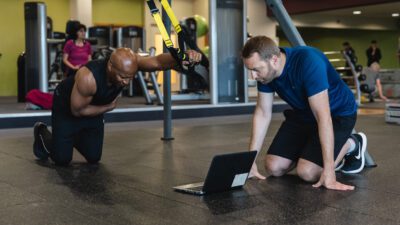
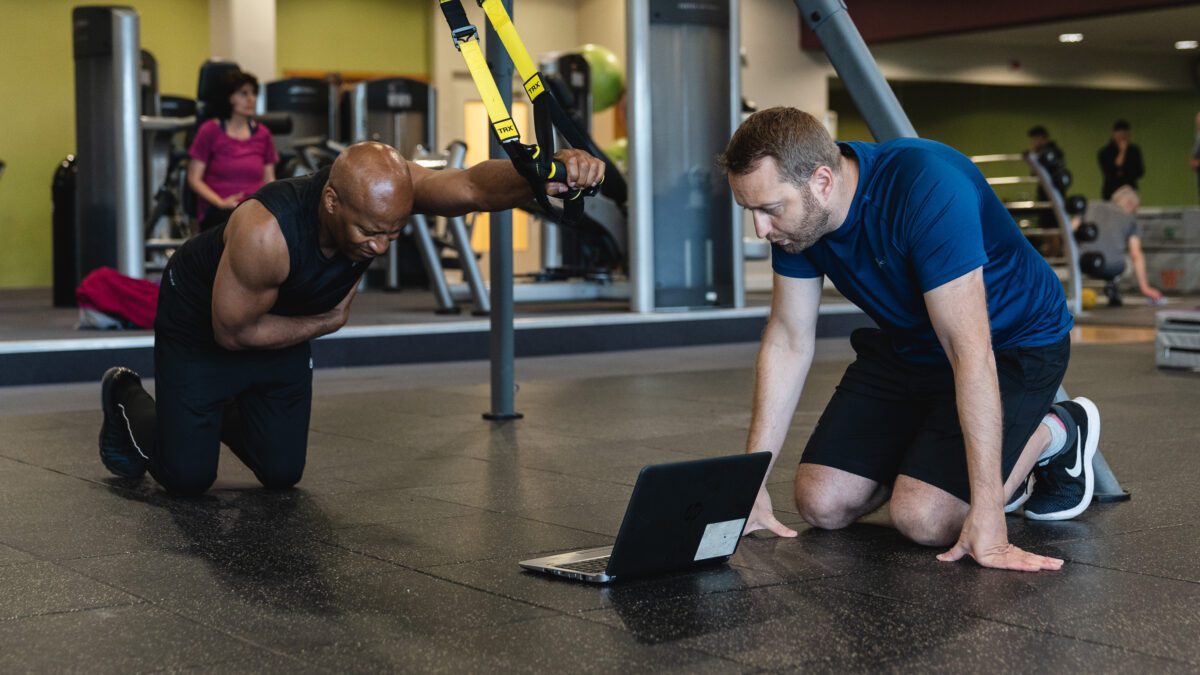
A Level 3 Personal trainer training a client
Underlying all of the above is a need for sound knowledge and skills in psychology and behaviour change in order to keep clients motivated and making progress towards their goals. The best Personal Trainers are those that can maintain their clients’ focus long-term results don’t come overnight after all.
What Qualifications Does a Gym Instructor Need?
To become a gym instructor (fitness instructor) you need to have completed an accredited Level 2 Gym Instructor Course with an approved provider. This may sometimes be referred to as a Level 2 certificate in Fitness Instructing.
Gym Instructor vs Personal Trainer: Responsibilities
The responsibilities and skills of a gym instructor and a personal trainer may seem similar but they are in fact quite different.
The biggest difference is in the way that they work.
Becoming a level 3 personal trainer takes a lot more training and knowledge so PT’s often work 1-2-1 with clients to achieve specific health and fitness goals. A gym instructor, on the other hand, cannot provide such tailored programmes and will mostly ‘walk the floor’ helping gym members with technique and use of equipment.
Below is a brief overview of some of the different responsibilities and duties of a gym instructor and a personal trainer.
Tailor advanced exercise programmes for clients’ individual and specific needs
–
✔
Work with higher-risk clients
–
✔
Complete advanced health and medical screenings
–
✔
Here’s a more accurate list of clients a fitness instructor can work within the UK:
1. Gym Members
Leading group classes such as Zumba, Pilates, spin, yoga, aerobics, or circuit training.
Offering advice on safe equipment usage in gyms.
2. Community Groups
Local councils or leisure centres host fitness programs for specific demographics (e.g., elderly groups, teens, or families).
Charity fitness events like walks, runs, or group fitness challenges.
3. Corporate Groups
Companies hire fitness instructors for team-building or wellness activities, such as lunchtime or after-work group sessions.
What is the difference between a Gym Instructor and a Personal Trainer?
Despite the common goal of helping people on their fitness journeys, there really is a big difference between the two roles.
The easiest way to think of it is that the Gym Instructor is the entry into a fitness career. It allows you to work with gym members and get experience working in gyms and building up your rapport. A level 3 qualified personal trainer will have completed advanced training and learning in order to really help people achieve their own tailored fitness goals.
Level 2 gets you into the industry. Level 3 is where you build a career.
Take a look at our ‘how to become’ section if you’d like to learn more about becoming a personal trainer or a gym instructor.
Personal Trainers must complete an approved Level 3 Personal Training Course. This will allow them to lead 1-2-1 training sessions with clients as a fully qualified PT.
Some personal trainers may choose to complete higher Level 4 qualifications in order to specialise and increase their long term earning potential.