Menopause and Exercise: Why Personal Trainers Must Stop Training Midlife Women Like Smaller Men
Perimenopause can start years before 51. Here’s how menopause changes muscle, bone, brain and confidence, and how exercise professionals should adapt their coaching.
If we’re serious about supporting women’s health, we need to stop thinking about menopause as something that happens at 51.
By the time many women receive a diagnosis, attend a menopause clinic, or even recognise what is happening to their bodies, the process may have been unfolding for years. The perimenopause transition can begin in the late 30s and early 40s, with fluctuating hormones influencing everything from energy and mood to sleep, cognition, recovery and musculoskeletal health. In the UK, the average age of menopause (12 months after a woman’s last period) is 51, so perimenopause can mean a decade of symptoms before that point.
Yet despite increasing awareness, many fitness professionals, personal trainers and healthcare practitioners are still applying principles designed around male physiology or younger female populations.
The result? Women feeling frustrated, unheard and blamed for bodies that no longer respond in the way they once did.
It’s time for a different conversation.
What does menopause actually do to the body?
For decades, menopause has been reduced to jokes about fans, hot flushes and mood swings. The reality is far more complex and serious.
Declining oestrogen affects multiple body systems, including the brain, bones, muscles, cardiovascular system, pelvic floor, bladder, joints and connective tissues. The consequences extend well beyond reproductive health and can influence physical performance, recovery, cognition, confidence and quality of life.
Many women experience:
Brain fog: forget words or instructions
Reduced concentration: will shut down before the task is complete
Sleep disruption: chronically functioning on 3-4 hours for years
Joint pain: even for those who are physically active
Fatigue: I will die I am so exhausted
Reduced muscle strength: shame of loss of strength
Pelvic floor dysfunction: this is NEVER to be glorified
Vaginal and bladder symptoms: Leaking is real and common
Anxiety and loss of confidence: 69% reported anxiety or depression symptoms that they found difficult during menopause. How does that present with a client in front of you?
The Forgotten Context: The Sandwich Generation
When we talk about menopause, we often focus on hormones, but women do not experience menopause in a laboratory. They experience it in real life.
Many are simultaneously managing careers, supporting ageing parents, caring for children, nurturing relationships and carrying an invisible mental load that has accumulated over decades.
They are the “sandwich generation.”
They’re leading teams at work while wondering why they can’t find the word they want in a meeting.
They’re supporting elderly parents while battling chronic fatigue. They’re helping young adults launch their lives while questioning their own identity and direction.
Too often we see physiology without appreciating context. And context matters. Shes not just a number, on a register, or your 6th client of the day. Know your people in front of you and you can do brilliant things together.
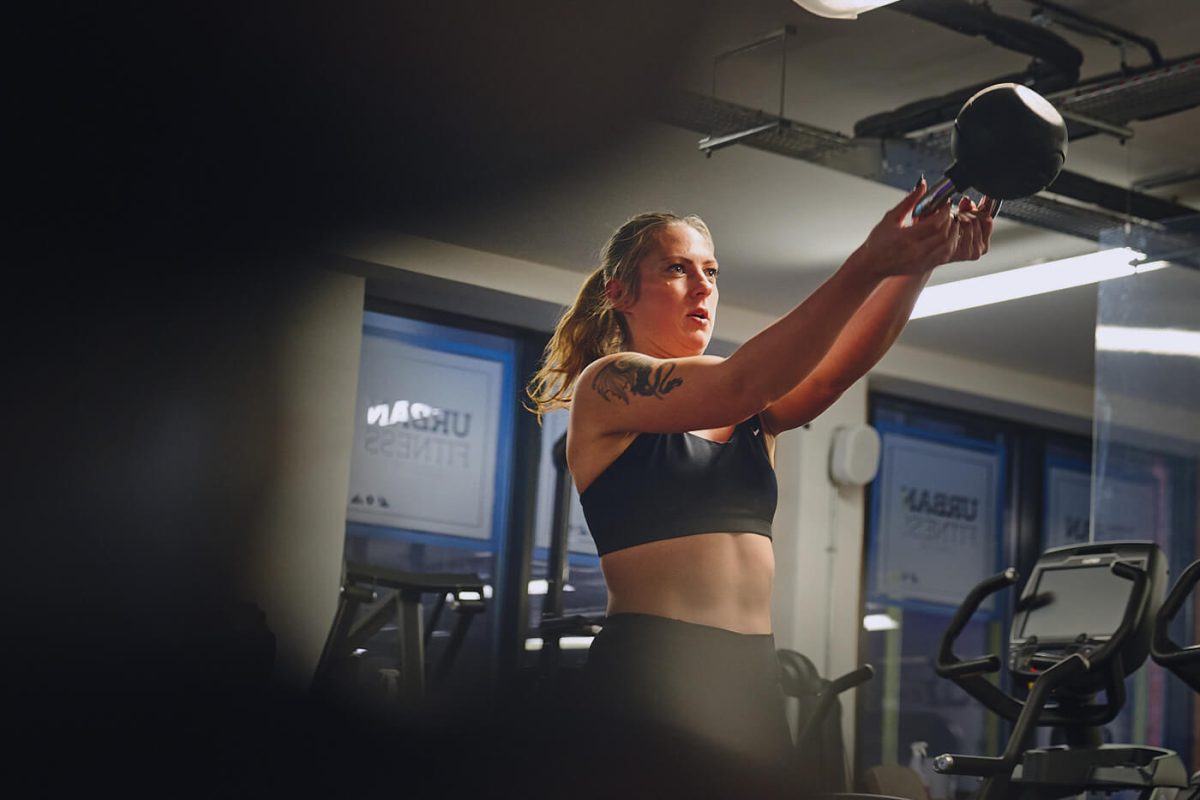
Woman performing a kettlebell exercise
Why Exercise Professionals Need a Different Lens
Exercise remains one of the most effective lifestyle interventions available for women during perimenopause and post-menopause.
But simply telling women to “move more” or “you’ll e fine” is not enough.
We must understand why and which movement matters.
Declining oestrogen contributes to loss of muscle mass, reduced bone density and increased cardiovascular risk. Strength training, resistance exercise and weight-bearing activities become increasingly important during this stage of life.
For exercise professionals, this means recognising that:
Recovery may look different and case by case and if she is on HRT.
Fatigue may fluctuate throughout the menstrual cycle during perimenopause.
Sleep quality may be compromised.
Pelvic floor symptoms may influence exercise choices.
Joint pain may alter tolerance to certain activities.
Confidence and self-efficacy may have taken a significant hit.
Women don’t need punishment. The above are all powerful questions, she might not even see the changes herself. Hormonal deficiency is slow and subtle.
They need understanding.
And they need practitioners who appreciate the biological, psychological and social realities influencing their health. Use the Greene’s Climacteric Scale to help guide conversations.
Want to programme for menopausal clients with confidence?
Menopause symptoms and what they mean for training
Use this as a starting point for conversations and programming, not a diagnosis. Refer on when symptoms are new, severe or outside your scope.
Symptom
What you might notice in a session
How to adapt your coaching
Poor sleep and fatigue
Lower energy, slower recovery, missed sessions
Have a “lighter day” version of every session; use effort ratings (RPE) to adjust load on the day
Brain fog
Forgetting cues, sets or exercise order
Keep cues short, give written or app-based programmes, repeat key movements
Loss of muscle strength
Lifts stalling or going backwards
Progressive resistance training at least twice a week; build load gradually rather than avoiding it
Lower bone density
Often silent: there may be nothing to see
Prioritise loaded strength and appropriate impact work; check for a known osteoporosis diagnosis first
Joint pain
Discomfort in certain ranges or with impact
Adjust range, tempo and impact; swap exercises rather than drop strength work
Pelvic floor symptoms
Avoiding jumping, running or heavy lifts
Ask sensitively, modify high-impact work and signpost to a pelvic health physiotherapist
Anxiety and low confidence
Hesitancy, self-criticism, dropping out
Set goals together, celebrate strength wins, focus on what her body can do
Why strength training matters more after menopause?
One of the most exciting opportunities during menopause is the chance to redefine what health success looks like.
For too long women have been encouraged to pursue thinness. Perhaps menopause offers an invitation to pursue strength instead. Bone health is key to longevity.
Strength isn’t simply about lifting heavier weights.
Strength is:
Carrying shopping independently.
Walking confidently on uneven ground.
Getting up from the floor.
Climbing stairs without fear.
Maintaining bone health.
Staying active for decades to come.
The evidence consistently supports resistance exercise for maintaining muscle mass, improving functional strength and supporting long-term health outcomes in menopausal women.
This is not about aesthetics.
It’s about independence.
Can exercise help menopause brain fog?
Around two-thirds of women report cognitive concerns during the menopause transition, including memory changes, concentration difficulties and what is commonly referred to as “brain fog“.
Historically, these symptoms were often dismissed.
Now we understand that hormonal changes interact with sleep, stress, mood, vasomotor symptoms and psychosocial pressures to influence cognitive function.
This is another reason why exercise matters.
Emerging evidence suggests physical activity supports memory, executive function, attention and overall brain health in post-menopausal women through a combination of improved blood flow, reduced inflammation and enhanced neuroplasticity.
Movement is no longer simply about fitness. It is brain health medicine.
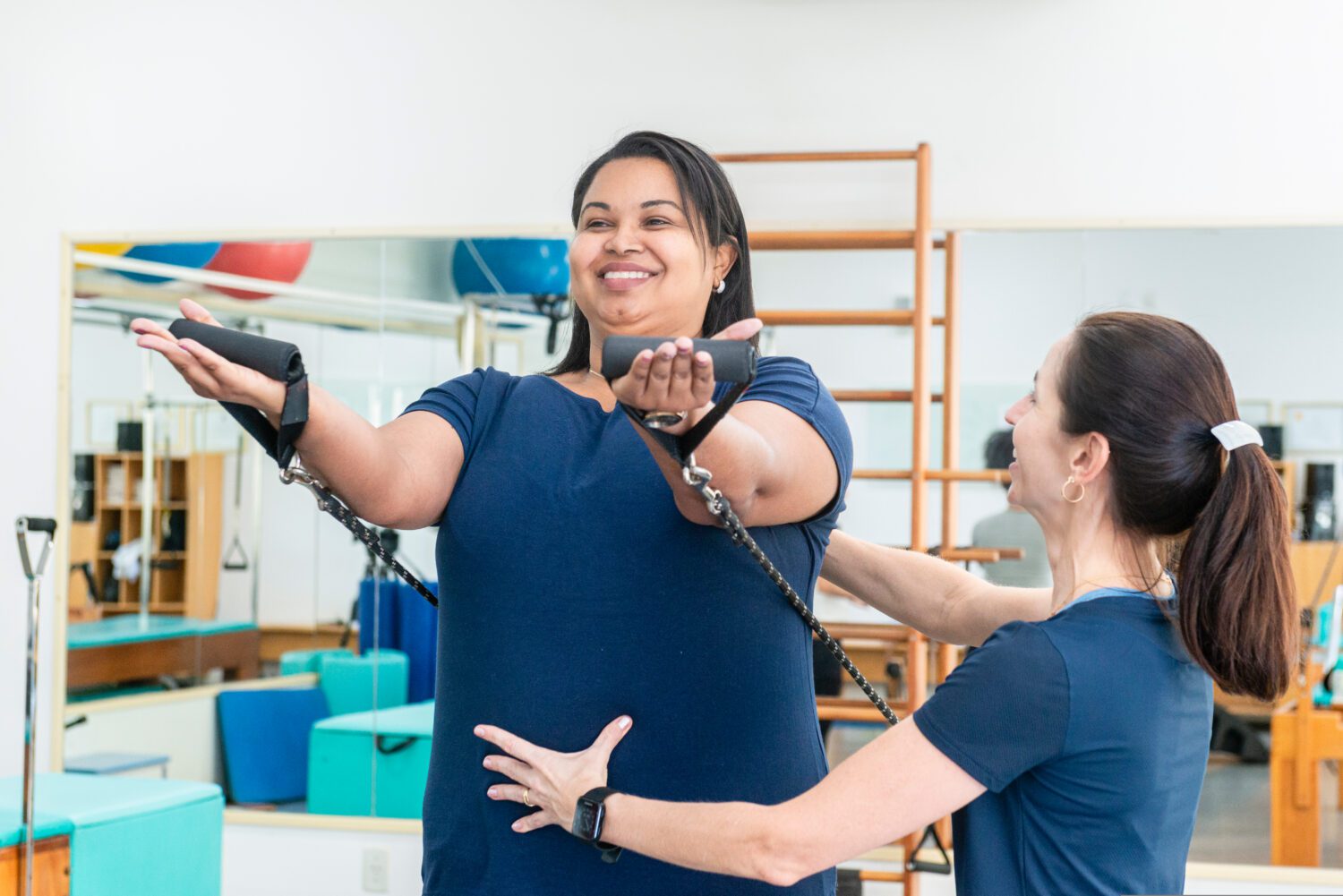
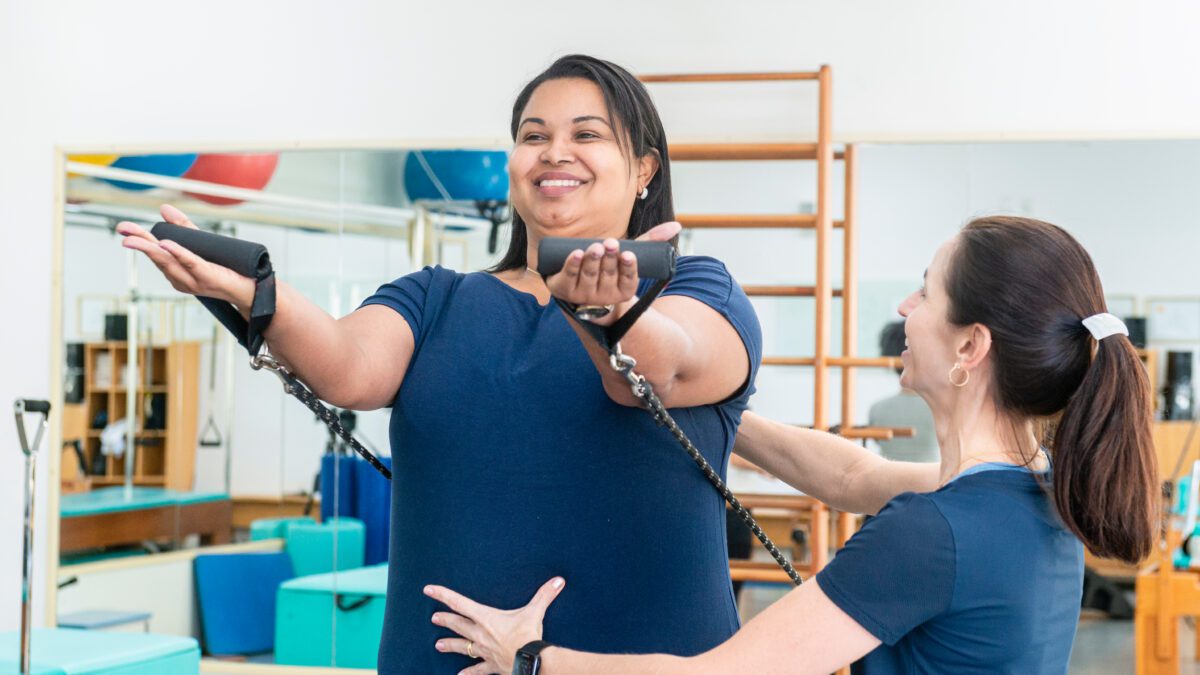
Pilates instructor guiding a midlife woman through a spring-resistance arm exercise in a studio
Menopause Is an Opportunity, Not a Decline
Too much of the menopause narrative focuses on loss.
Loss of fertility, youth, hormones. And confidence.
But what if we viewed menopause differently? What if you are leading that narrative?
What if menopause was not an ending but a rebranding?
An opportunity to reassess health priorities.
To build strength. to invest in future brain health.
To protect bone health. NEVER give up the weights!
To set boundaries.
To rediscover purpose.
To stop apologising.
To finally place ourselves somewhere near the top of the to-do list.
Many women enter menopause feeling they have lost control of their bodies.
The role of health, fitness and wellbeing professionals is not simply to help them lose weight.
It is to help them reconnect with their body, their capabilities and their future potential.
The Revolution Starts Here
For exercise professionals, menopause education is no longer a “nice to have.”
It is an essential competency.
Women deserve professionals who understand that menopause affects far more than reproductive health.
They deserve programmes designed for their biology.
They deserve conversations that extend beyond calorie burn and body weight.
And they deserve to understand that this chapter of life can be one of the strongest, healthiest and most empowering they will ever experience.
Menopause is not the end. It’s the revolution.
Ready to lead that revolution with your own clients? Our Menopause and Health Programming coursegives you the evidence-based knowledge to programme confidently for women through every stage of menopause.
Usually in a woman’s 40s, though it can begin in the late 30s. The average age of menopause in the UK is 51, so symptoms can be present for several years before periods stop.
What is the best type of exercise during menopause?
A mix works best, with resistance training as the priority for protecting muscle and bone. Add weight-bearing or impact work where appropriate, and aerobic exercise for heart health. UK guidelines recommend strength work on at least two days a week.
Can exercise help with menopause brain fog?
Emerging evidence suggests regular exercise supports memory, attention and executive function in postmenopausal women, likely through better blood flow, lower inflammation and improved neuroplasticity.
Why do personal trainers need menopause training?
Menopause changes recovery, strength, bone health, sleep and confidence. Specialist knowledge helps trainers adapt programmes safely, ask the right questions and keep midlife women training long term.